TRT vs Steroid Cycle: What’s the Difference?

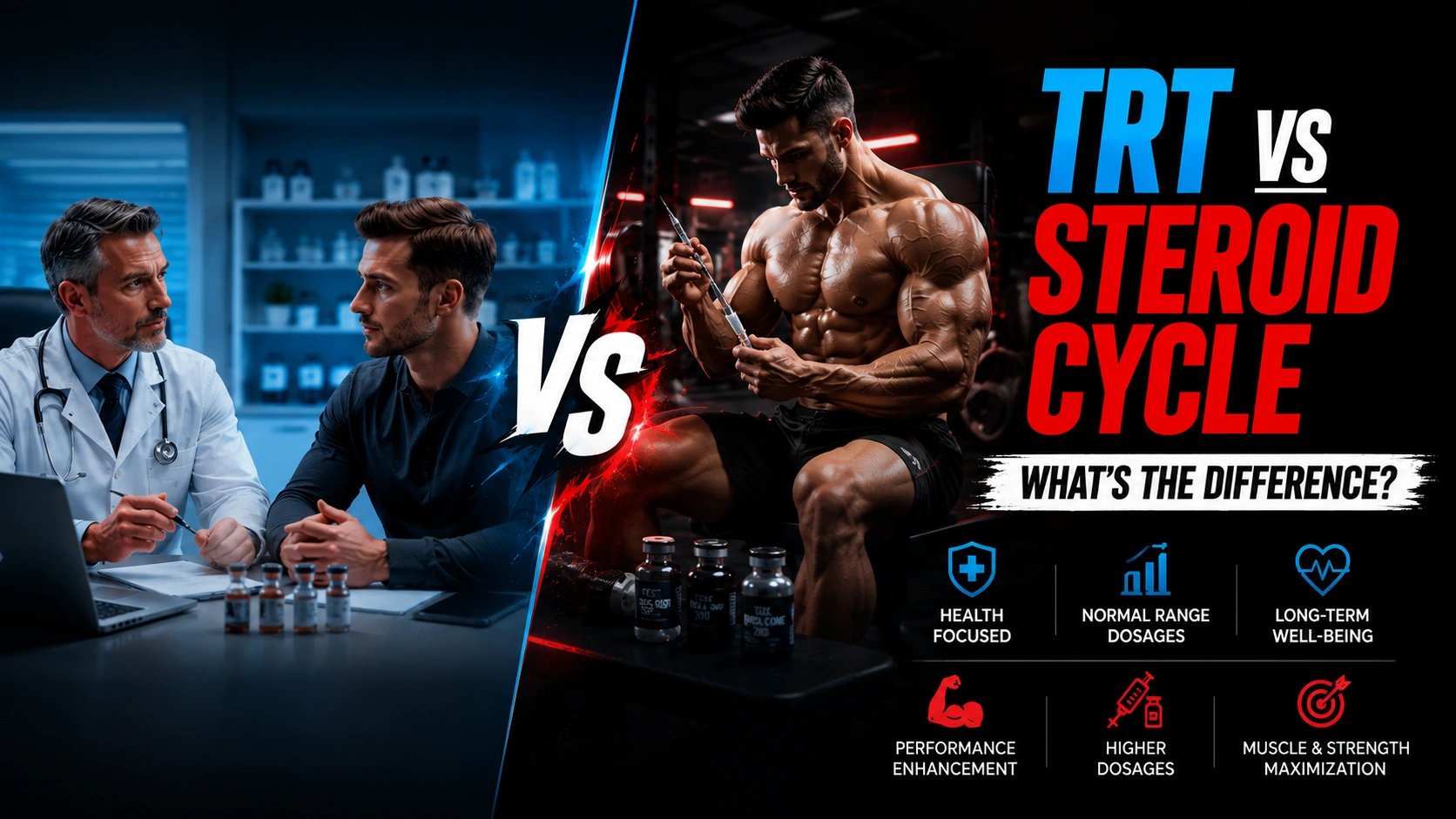
TRT vs Steroid Cycles: Understanding the Difference
Over the last decade, testosterone has become one of the most discussed topics in men’s health and fitness. Open any bodybuilding forum, scroll through social media, or listen to a health-focused podcast, and you’ll eventually come across conversations about TRT, testosterone injections, hormone optimization, or anabolic steroids.
The problem is that many people use these terms interchangeably. Some believe Testosterone Replacement Therapy (TRT) is simply a medically approved steroid cycle. Others assume that anyone injecting testosterone is using performance-enhancing drugs.
The reality is far more nuanced.
While TRT and steroid cycles both involve testosterone, they serve completely different purposes. One is designed to restore normal hormone levels and improve quality of life. The other is intended to push the body beyond its natural limits in pursuit of muscle growth, strength, and performance.
Understanding the distinction is essential for anyone considering testosterone therapy, researching performance enhancement, or simply trying to separate facts from the misinformation that often dominates online discussions.
Why Testosterone Matters
Testosterone is the primary male sex hormone and plays a critical role in far more than muscle growth. Healthy testosterone levels influence energy, mood, libido, recovery, cognitive function, bone density, and body composition.
When testosterone levels decline significantly, men often begin to notice symptoms that impact everyday life. Fatigue becomes more common. Motivation drops. Training performance suffers. Recovery slows down. Some men struggle with decreased libido, erectile dysfunction, or a general feeling that they are no longer functioning at their best.
This is where TRT enters the conversation.
What Is TRT?
Testosterone Replacement Therapy is a medical treatment intended for men with clinically low testosterone levels. The goal is straightforward: restore hormone levels to a healthy physiological range and alleviate the symptoms associated with testosterone deficiency.
Unlike a steroid cycle, TRT is not designed to produce dramatic physique transformations. It is designed to help men feel normal again.
Many men who begin TRT report improvements in energy, focus, mood, libido, sleep quality, and overall well-being. Some also notice positive changes in body composition, as healthy testosterone levels can make it easier to maintain muscle mass and control body fat.
However, TRT is not a shortcut to becoming a bodybuilder. It is a long-term medical treatment aimed at restoring hormonal balance rather than maximizing physical performance.
What Is a Steroid Cycle?
A steroid cycle has a completely different objective.
Rather than restoring hormone levels to normal, anabolic steroid cycles intentionally elevate hormone levels far beyond what the body would naturally produce. The goal is to accelerate muscle growth, increase strength, improve recovery, and enhance athletic performance.
In most cases, testosterone serves as the foundation of a cycle. Additional compounds are often added depending on the user’s goals. Some athletes prioritize rapid size gains, while others focus on fat loss, muscle preservation, or achieving a harder, more defined physique.
The key difference is intent.
TRT seeks normality. Steroid cycles seek enhancement.
The Dosage Difference
One of the easiest ways to understand the distinction between TRT and steroid use is by looking at dosage.
A typical TRT protocol usually involves enough testosterone to maintain healthy blood levels within the normal physiological range. The exact amount varies from person to person, but the objective remains the same: replace what the body is no longer producing efficiently.
Steroid cycles operate on a completely different scale.
Performance-enhancing protocols often use several times the amount of testosterone required for hormone replacement. In many cases, users also combine multiple anabolic compounds simultaneously to amplify results.
This dramatic increase in hormone exposure is one of the primary reasons why steroid cycles produce faster physical changes but also carry greater risks.
Expected Results: Health vs Performance
Another major difference lies in expectations.
A man starting TRT after years of low testosterone may experience life-changing improvements. Increased energy, better recovery, improved mood, enhanced libido, and gradual body composition improvements can significantly improve quality of life.
However, these changes tend to occur gradually.
TRT is not intended to produce twenty pounds of muscle gain in a few months.
Steroid cycles are a different story. Because hormone levels are pushed well beyond natural limits, muscle growth and strength gains often occur much more rapidly. Recovery between training sessions improves significantly, allowing users to train harder and more frequently.
The trade-off is that the physiological stress placed on the body is also substantially greater.
The Health Considerations Most People Ignore
One of the biggest mistakes beginners make is focusing exclusively on results while ignoring long-term health considerations.
Even when administered responsibly, TRT requires ongoing monitoring. Blood work is essential to evaluate testosterone levels, estrogen balance, red blood cell count, cholesterol markers, and overall health.
When properly managed, many men successfully remain on TRT for years while maintaining excellent quality of life.
Steroid cycles introduce additional variables.
Higher dosages often lead to greater strain on cardiovascular health, cholesterol levels, blood pressure, and other biomarkers. Certain compounds may also increase the likelihood of side effects such as acne, hair loss, estrogen-related issues, or hormonal instability.
The more aggressive the cycle, the greater the potential consequences.
What About Natural Testosterone Production?
This is where many newcomers become surprised.
Both TRT and steroid cycles suppress the body’s natural testosterone production.
When external testosterone is introduced, the brain receives a signal that hormone levels are sufficient. As a result, the body’s own production decreases or stops altogether.
For men on TRT, this suppression is generally expected and accepted as part of treatment.
For steroid users, suppression becomes a more complicated issue because recovery after a cycle is not always guaranteed to be immediate or complete.
This is why concepts such as Post Cycle Therapy (PCT) play such an important role in performance enhancement.
TRT and Fertility
Another topic that deserves attention is fertility.
Many men are unaware that testosterone therapy can reduce sperm production. Because TRT suppresses natural hormonal signaling, fertility may decline during treatment.
The same principle applies to steroid cycles, often to an even greater extent.
For men planning to have children in the future, fertility preservation should be part of the conversation before starting any testosterone-based protocol.
Fortunately, there are strategies that may help support fertility, but this is an area that requires proper planning rather than guesswork.
Why So Many People Confuse TRT and Steroid Cycles
The confusion largely stems from the fact that both approaches involve the same hormone.
Someone on TRT may inject testosterone every week. A bodybuilder running a steroid cycle may also inject testosterone every week.
From the outside, the protocols can appear similar.
What differs is the purpose, dosage, expected outcome, and long-term strategy.
Comparing TRT to a steroid cycle is similar to comparing a physician-prescribed replacement dose of thyroid medication to someone using performance-enhancing stimulants. The substance may be related, but the objective is entirely different.
Final Thoughts
TRT and steroid cycles are often discussed in the same conversations, but they are not the same thing.
TRT is a medical treatment focused on restoring healthy hormone levels and improving quality of life in men with testosterone deficiency. Steroid cycles are performance-enhancing protocols designed to accelerate muscle growth, strength, and athletic performance by pushing hormone levels beyond natural ranges.
Neither approach should be viewed lightly.
Before making any decision involving testosterone, comprehensive blood work, realistic expectations, and a clear understanding of the long-term implications are essential.
The more informed you are, the better equipped you will be to choose the path that aligns with your goals, health, and future plans.